Showing posts with label Food FYI. Show all posts

12/10/14

Stocking your kitchen for the holidays


Who's getting ready for some serious baking over the next two weeks? Me! You? I've started on my annual cookie baking as well as a few candies. Can't forget the sweet and yeast breads! Oh dear, I feel 20 pounds coming back on! Once again, I'm fortunate to be able to share a wonderful article with you on stocking your kitchen up for the holidays. Thank you to Amber Brubaker for sharing!

Key Ingredients for the Holidays


Just because Thanksgiving was last month doesn’t mean there won’t be any more baking days this year. The holidays are filled with the best foods to share with friends and family. You don’t want to be found without an essential ingredient in your kitchen when you need to make an impromptu side dish or dessert for a party or gathering. The secret is to stock up now on essential holiday ingredients.

Lucky for you, most of the essential items go on sale during the weeks following Thanksgiving, so you can rest assured that you are stocking up at the best prices. Use this comprehensive guide to help you complete your shopping list and store the ingredients properly.

Candies


You’ll want a selection of candies for both baking and serving. Chopped up candies are great in treats, and when friends come calling, you can offer them a candied treat from a pretty dish on your coffee table.

Butter


Butter is one of the most expensive baking essentials. Luckily, it stays good for awhile, especially if you freeze it. So when it’s on sale, stock up, freeze it, and simply thaw it when you need it. For your holiday preparations, you’ll want both salted and unsalted butter—salted for spreading and cooking and unsalted for baking.

Margarine and Shortening


Similar to butter, these can be frozen too. Certain recipes specifically call for margarine or shortening and you can’t use butter as a substitute. For example, using butter instead of shortening may ruin your pie crust.

Meats


If you see a great deal on meats—particularly ham and turkey—snatch up as much as you can. These meats have plenty of natural salt in them and will last in your freezer for up to six months if put in good quality, freezer-safe bags. You’ll have plenty of protein for the holidays and after.

Sugars


You’ll need brown and white—and plenty of it—for baking, and confectioners sugar for frosting and sprinkling. Store all sugar in waterproof, airtight containers.

Store-Bought Crackers and Cookies


It’s always a good idea to have these on hand for a last-minute addition to a party. Cookies also make easy pie crusts or dessert toppings when crumbled.

Flour


Flour is a must, and you’ll want different kinds, including, whole wheat, all-purpose white, and cake flour. There’s also white wheat flour, which offers all the health benefits of wheat flour with a lighter, fluffier taste. Store your bulk flour in waterproof, airtight containers to avoid contamination.

Powdered Milk


Fresh milk is difficult to buy in bulk, since it quickly expires. To work around this, get a supply of powdered milk which you can mix up for baking or cooking at a moment’s notice when you’re out of milk.

Leavening Agents


Leaveners like baking soda, baking powder, and yeast, will last for years, but it’s still good to change them out every now and then. The holiday season is a perfect time to do just that. Store your fresh baking soda and powder in airtight containers in the cupboard, and store yeast in the fridge or freezer.

Extracts and Flavorings


If you’re going to bake anything at all, you will need a good supply of vanilla, but it’s also a good idea to stock up on other flavorings, especially if you love trying new recipes or want to make candies. For the holidays, don’t forget almond, peppermint, lemon, anise, rum, and any other flavorings you love.

Heavy Cream


You can store heavy cream in the freezer for up to two months, which is perfect for the holidays. Get as much as you can when it goes on sale, and then thaw it for all your whipped cream and topping needs.

Liquid Sweeteners


Molasses, light and dark corn syrup, sweetened condensed milk, and maple syrup are must-haves for any candy making you’ll do during the holidays. You’ll want to have agave nectar and liquid stevia on hand as well in case you’re baking for those with specific food needs.

Canned Goods


Canned goods are fabulous because they last. Stock up on corn, green beans, pumpkin, pie fillings, yams, beets, evaporated milk, and all the other delicious canned foods you love at holiday meals. Stack these carefully on your shelf to avoid injury.

Dried Fruit and Nuts


Dried fruits and nuts make great add-ins for cookies, candies, and pies, and they’re fantastic for snacking. Stock up on dried apricots, dates, raisins, cranberries, peanuts, walnuts, pecans, brazil nuts, and anything else you like.

Spices and Herbs


Contrary to popular belief, spices and herbs don’t last forever. In fact, they begin to lose their potency six months after opening. Use the holiday shopping as an excuse to replace some spices. If nothing else, you’ll want to replace cinnamon, nutmeg, cloves, allspice, ginger, sage, rosemary, thyme, and your other favorite spices. Try using these classic spices to make something new. For example, did you know you can use cloves in a glaze for your meat? Click here for other ideas.   

Chocolate and Chips


A solid collection of chocolates and chips to add to your cookies and desserts will get you through the holidays. You’ll want unsweetened bakers chocolate, cocoa powder, and high-quality dipping chocolate. You’ll also want every kind of chip imaginable for the best cookies. Store these in cute cannisters along your kitchen counter to keep them fresh.

With these ingredients filling your kitchen, you won’t have any problems making the best holiday foods!  
Continue Reading... »

1/7/14

FYI - Zucchini


There is a local farm here that we love to hit up every year - Gilcrease Orchard.  They have a variety of produce, including squashes.  We love to head over there and grab some nice big zucchinis to grill up during the summer.  The zucchini is a summer squash which can reach nearly a meter in length.  It is usually harvested at a smaller size though since they tend to be sweeter when immature.  Zucchini can be dark or light green.  It originated in Italy.

Zucchini is served as a vegetable, even though it is technically a fruit.  It is served often as a savory side dish, cooked.  It can be prepared using a variety of cooking techniques such as steamed, boiled, grilled, stuffed and baked, barbecued, or fried.  It can also be julienned as served as a pasta alternative.  Zucchini is also often baked into bread, similar to banana bread, or incorporated into cake mixes.

Now for the "yummy" part of zucchini - nutrition.  Because zucchini has such a high water content, it's very low in calories.  One medium raw zucchini contains only 31 calories.  It also contains no fat or cholesterol.  It contains only 7 grams of carbohydrates.  But, of those carbohydrates, 2 grams are from dietary fiber, accounting for 9% of your recommended daily value of fiber.  Zucchini contains 2 grams of protein.  So you benefit from both its fiber and protein.

Zucchinis are full of lovely vitamins and minerals as well.  One medium zucchini packs a serious vitamin C punch - 56% of your daily recommended value.  It also contains 11% of your Vitamin K value, 16% of riboflavin, 21% of Vitamin B-6, and 14% folate.  It's super rich in minerals such as potassium and manganese (15% and 17% of your daily value, respectively).

So how to use zucchini?  I've used it in bread, soups, and I love to grill it with a little olive oil and herbs during the summer for a side dish to poultry.  But most recently, I've started using it as a pasta alternative.  On Friday, you'll see just how I've done that.  And man, you will not be disappointed.
Continue Reading... »

12/3/13

Food FYI: Cranberries


So I have a little story to share with you.  It happened on Thanksgiving Day.  As I've mentioned before, we do Thanksgiving dinner pot-luck style.  And cranberries were assigned out to someone. Well, that person forgot to bring them.  Oh snap.  K1 freaked out - "WHAT?!  NO CRANBERRIES ON THANKSGIVING?!"  She had to have cranberries.  Thankfully a willing party went to the store (thank you Smith's Food and Drug for being open that morning!) to grab some.


My question is, what's the big fuss over cranberries?  Why are they so important on Thanksgiving.  And so my research began.  The name cranberry derives from "craneberry", first named by early European settlers in America who felt the expanding flower, stem, calyx, and petals resembled the neck, head, and bill of a crane.  Native Americans were the first to use cranberries as food. They used cranberries in a variety of foods, especially for pemmican, wound medicine and dye.


About 95% of cranberries are processed into products such as juice drinks, sauce, and sweetened dried cranberries. The remaining are sold fresh to consumers.  Cranberries are normally considered too sharp to be eaten plain and raw, as they are not only sour but bitter as well.  Cranberry juice is a major use of cranberries; it is usually either sweetened to make "cranberry juice cocktail" or blended with other fruit juices to reduce its natural severe tartness. Usually cranberries as fruit are cooked into a compote or jelly, known as cranberry sauce. Enter Thanksgiving dinner with roast turkey.  The berry is also used in baking (muffins, scones, cakes and breads). In baking it is often combined with orange or orange zest.  Fresh cranberries can be frozen at home, and will keep up to nine months; they can be used directly in recipes without thawing.


Raw cranberries have moderate levels of Vitamin C, dietary fiber and the essential dietary mineral, manganese, as well as a balanced profile of other essential micronutrients.  Raw cranberries are a source of polyphenol antioxidants, phytochemicals under active research for possible benefits to the cardiovascular system and immune system, and as anti-cancer agents, such as in isolated prostate cancer cells.  However, it is uncertain whether polyphenols and flavonoids account for the benefits of diets rich in plant-derived foods.

Cranberry juice contains a high molecular weight non-dializable material that might inhibit formation
of plaque by Streptococcus mutans pathogens that cause tooth decay.  Cranberry juice components also may possibly influence formation of kidney stones.  One study compared cranberries with twenty other fruits, showing that cranberries had a high amount of total polyphenols. Cranberry tannins have laboratory evidence for anti-clotting properties and may prevent recurring urinary tract infections in women.  Long-term tolerance is also an issue.  Raw cranberries and cranberry juice are abundant food sources of flavonoids such as proanthocyanidins, flavonols and quercetin. These compounds have shown possible activity as anti-cancer agents in vitro. 

So there you have it - the not-so-edible-in-raw-form cranberry!  Did you have cranberries with your Thanksgiving feast?  Here's my recipe for Cran-Raspberry Jello Salad!


Continue Reading... »

11/12/13

Food FYI: Turkey


We are fast approaching Thanksgiving here in the United States.  So for this week, I thought I'd share a little with you about turkey.  Not the country, the Thanksgiving staple that so many men drool over this time of year.

Do you remember that bit from "A Christmas Story" where the dad sneaks into the kitchen to grab a bite of the not-yet-done turkey?  The mom screams from the basement, "Don't eat that turkey, it's not done cooking yet!  You'll get worms!"  Did you buy it?  And then remember the Bumpus hounds that came screaming in and devoured the entire bird while everyone else was busy in another room?  Oh the terror!  The disappointment.  That poor man.  All he wanted was turkey.

Well, I'm here to talk a little about turkey today.  Here's a few questions that I have always asked about:


Q: I'm having people over for Thanksgiving dinner.  How much turkey should I buy?
A: Rule of thumb is (without having leftovers) 1 pound per person.  So if you are like us (aka we live for Thanksgiving leftovers), we are having family over for dinner.  We will purchase a 15-20 pound turkey.  That should give us enough for our guests plus leftovers for some sandwiches the day after.


Q: I bought a frozen turkey.  How long should it take to thaw out?
A: First of all, let's talk defrosting safety.  NEVER EVER EVER EVER let your turkey thaw out on the counter.  Did I say EVER?!  You will give yourself and your guests salmonella poisoning!  No one wants to spend the day after Thanksgiving with those kind of leftovers.  Here are your guidelines:

  • In the Refrigerator (Slow Defrost, safest): 24 hours for every 4 pounds (so if I buy a 20 pound bird, I will plan on letting it defrost in the fridge for 5 days)
  • In the sink, submerged in cold water (Fast Defrost, still okay): 30 minutes for every pound (again, for a 20 pound bird, it will take 10 hours)


Q: I am planning on roasting my turkey.  How many hours will it take?
A: You should never cook your bird below 325 degrees.  This will ensure that the internal temperature of the turkey reaches a safe level quickly.  AND, it's safest if you don't stuff your turkey.  I wrap my stuffing in aluminum foil or put it in a large aluminum pan if I'm making a double batch and bake it separately.  Because I want you to be safe, I'm giving you guidelines for an UNSTUFFED turkey.  For a stuffed turkey, please see the guidelines on the USDA website.  And remember, these times are for roasting at 325 degrees:

  • 4-8 pounds (generally a breast): 1.5-3.25 hours
  • 8-12 pounds: 2.75-3 hours
  • 12-14 pounds: 3-3.75 hours
  • 14-18 pounds: 3.75-4.25 hours
  • 18-20 pounds: 4.25-4.5 hours
  • 20-24 pounds: 4.5-5 hours
So let's use the example of my turkey again. If I'm planning on roasting a 20 pound bird, and we're eating at 3:00 pm, I will put my turkey in a preheated oven at 10:00 am.  That will give my bird enough time to rest on the counter (keeping it juicy) and then for carving.  And when in doubt, the turkey "timers" that come with the bird are 99% of the time accurate.  I have only ONCE had a timer not pop out.  


Q: I am not using the timer that came with the turkey.  Instead I'm using a meat thermometer.  What should the internal temperature (aka the thickest part of the breast) be at before serving?
A: The safe temperature for consumption is 165 degrees.  


Q: Can you fry a turkey?
A: YES YES YES YES YES YES!  That is exactly how we do ours!  We bought a frying rig a few years ago, and ever since we made our first one we've been horribly addicted.  PLEASE PLEASE PLEASE note that frying a turkey can be extremely dangerous.  We take precautions - we don't fry near the house, hubs wears gloves, no one is outside around the fryer while it is going (aka curious little hands or pets), we ONLY use our professionally made fryer (never try to rig something up on your own), and we always have items near to put out a fire just in case.  The biggest tip I can give you for frying a turkey is to make sure that your turkey is completely thawed.  No ice.  If there is ice, when it hits the hot oil, it will cause the oil to bubble up, over flow, and catch on fire.  Bad situation for everyone involved. Dry the bird with paper towels before you slowly submerse it in the oil.

Now that I have scared the crap out of you.  Fried turkey is amazing.  Seriously.  And it's not difficult.  AND it cooks fast.  You want to make sure you are following the guidelines that come with your fryer as to how much oil to use (using peanut oil is best since it holds a temperature better than other oils). Generally you will want 3 gallons of oil per 10 pounds, but again, follow your instructions.  And never use a bigger bird than is suggested for your fryer.  Here are the guidelines for time, frying at 350 degrees:
  • 3 minutes per pound for a 10-13 pound turkey
  • 3.5 minutes per pound for a 14-20 pound turkey
Using my bird as an example again, it would take 1 hour and 10 minutes to fry my 20 pound turkey.  You would then let it sit and rest before carving.  So if we were eating at 3:00 pm, I would start frying my turkey somewhere around 1:00 pm.


Q: Can I marinade a turkey?
A: Yes!  You have a few options.  You can either do a traditional marinade (submersing the bird in a brine/liquid) or you can do an injectible marinade. I will be sharing my recipe for a turkey brine next week.  They sell kits for injectibles.  The best one we've tried I found at Bass Pro Shop, and it's a Cajun flavor.  OH DROOL!


Q: How long can I keep my leftovers?
A: Any turkey that is left out at room temperature for longer than 2 hours should be tossed.  So designate a clean up person (aka THE HUBS!) to get that delicious bird put away right after you are done eating.  You can refrigerate leftover turkey for up to 4 days.  If you are freezing leftovers, make sure they are wrapped really well and use within 6 months.  I usually divide my leftovers in half - half for consumption within 2 days after Thanksgiving, and then I freeze half for a casserole or chili later.

Q: Do you know the Turkey Song?
A: Why yes, yes I do.  I am old enough to remember seeing this for the first time.  Sigh.

So there you have it.  If you have any other turkey related questions, please feel free to leave a comment and I will try and answer them.  :)  
Continue Reading... »

11/5/13

Food FYI - Pumpkin


It's been a while since I did a Food FYI, and I thought that a certain seasonal food would help to bring it back - PUMPKIN!  This time of year is amazing for me.  As soon as I see that first bottle of Pumpkin Spice creamer in the freezer section I must buy it.  And I absolutely love that pumpkin everything becomes a staple during the time of year when it's my birthday as well.  For years, I would request a pumpkin pie for my birthday "cake."  But enough of that, let's find out about pumpkins.

Pumpkins are a squash, native to North America.  They are grown for food as well as recreation (Pumpkin
Chunkin' anyone?).  They typically weigh 6-18 pounds, but some of the largest pumpkins are known to weigh more than 75 pounds!  They grow on a flowering vine. 95% of the pumpkins that are grown for consumption come from a farm in Illinois, owned by the processing company Libby.  And get this, 1.5 billion pounds of pumpkins are grown each year!  That's a lot of pumpkin!

Pumpkins contain similar nutrients to carrots and other squash - lutein, alpha and beta carotene, and vitamin A.  Here are a few health benefits from Pumpkins:

1. A cup of cooked, mashed pumpkin contains more than 200% of your recommended daily intake of vitamin A, which aids vision.

2. Pumpkin is an often-overlooked source of fiber, but with three grams per one cup serving and only 49 calories, it can keep you feeling full for longer on fewer calories.  A fiber-rich diet seems to help people eat less and shed pounds.

3. Pumpkin seeds are naturally rich in phytosterols that have been shown to reduce LDL or "bad" cholesterol.

4. Pumpkin seeds are rich in tryptophan, the same nutrient in turkey that makes you take that Thanksgiving nap!  This amino acid also aids in the production of serotonin which helps moods.

5. Pumpkins contain potassium.  In fact, they contain more potassium than a banana!  A cup of cooked pumpkin contains 564 mg of potassium, while 1 cup of banana contains 422 mg.

So there's a little ditty about pumpkin.  Not only do they make awesome Jack o' Lanterns and pie, but they seriously do a body good!


Pumpkin Recipes:


Pumpkin Bread
Pumpkin Pie Waffles
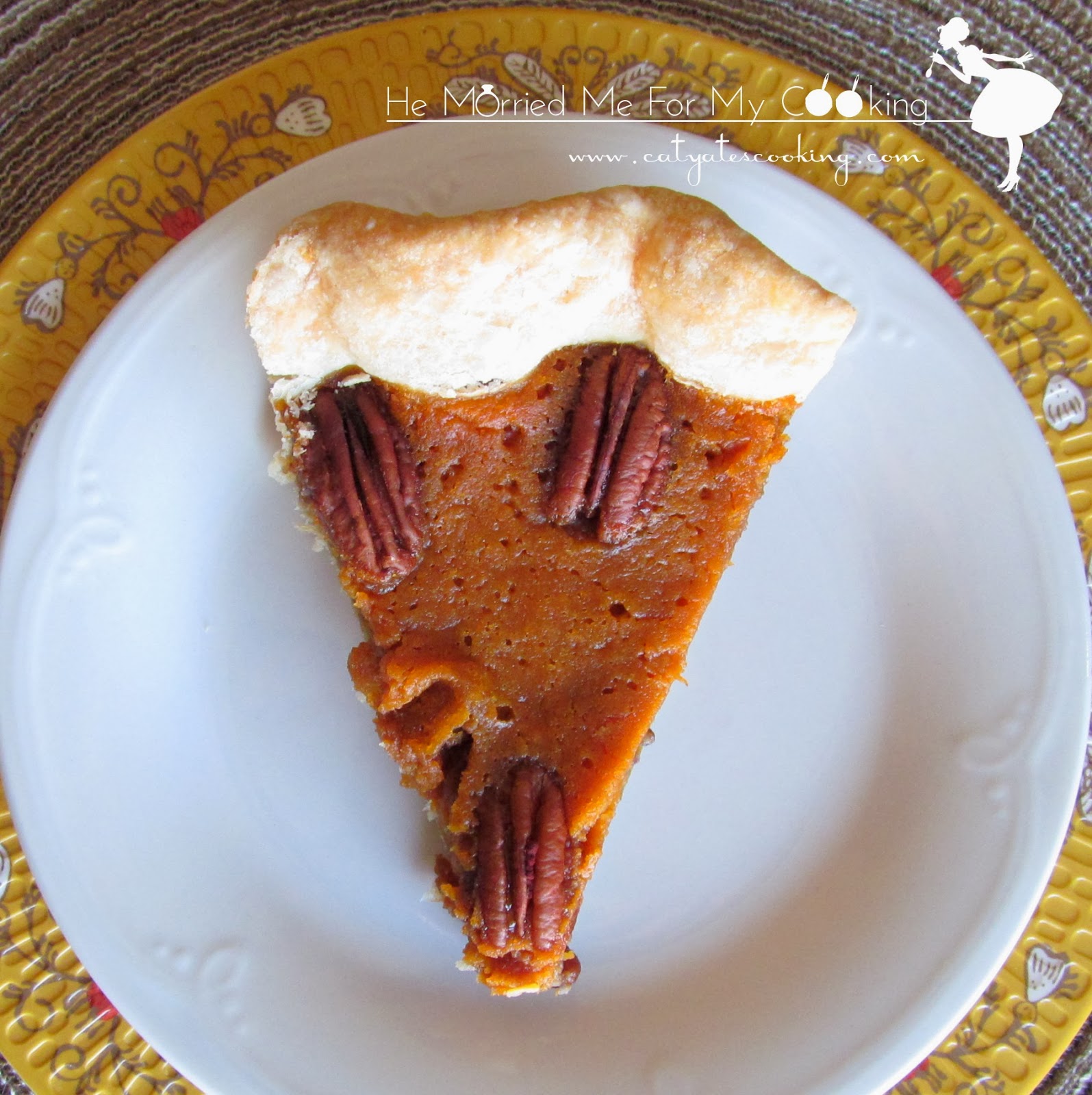
Pumpkin Pecan Pie
Pumpkin Pie


Resource: Huffington Post
Continue Reading... »

10/23/13

Types of Pie Pans


Today I wanted to talk a little about the different types of pie pans, or plates, that are used.


Metal pans are lightweight, inexpensive and can last just about forever. You will find these used in most pies that are sold in stores and restaurants.  They heat unevenly, so pies made with these plates sometimes have portions of crust that are more done than others. Additionally, if you are using a very thin pan, you may have to reinforce the pan with a baking sheet or second pie plate, as it may not be strong enough to support the weight of a baked pie without bending. 


Glass pie plates retain heat and heat very efficiently, which means that they also distribute heat evenly and your pies will bake evenly in these. The bottom of the crust will also keep cooking for a few minutes after the pie comes out of the oven, which minimizes the risk of a soggy crust. These pans are quite durable and inexpensive, so if you are careful with your pans they will last you a very long time.


Ceramic pans are the most expensive type of pan, but are a favorite of many bakers. Ceramic offers the same heat-retention properties as glass, so your pie crusts will bake evenly. These pans also tend to be very pretty, with colorful finishes that make for a great presentation when you serve your pies.


So which one do I like?  I own both glass and ceramic.  I REFUSE to use metal pans. To me, they just look cheap (which they are), and for all the work that goes into a pie you should use a nice pie plate to show off your efforts.  
Continue Reading... »

9/17/13

Food FYI - High Protein Vegetables


Last Friday I told you how Hubs was going to be doing some heavy duty lifting over the weekend - Crossfit.  A lot of workouts.  Putting his body through the wringer.  So I knew that he was going to be needing a lot of protein.  And I have a hard time just feeding my family meat.  So, I did a little research.  I was curious what vegetables are high in protein.  Here's what I found, and no, I did not include legumes:


Does anything on this chart surprise you?  Because something sure surprised me - Corn?!  Really?  Of all the vegetables, corn ranks the highest in protein content per cup.  Everything I've ever read about corn is that it is empty calories.  Holy crap.  And then cauliflower.  I knew there was a reason that I'm loving Mashed Cauliflower more than mashed potatoes these days.  

Again, I didn't include legumes in this, because they are naturally the source of alternative protein that everyone knows about.  I wanted to see exactly what vegetables have high protein content because I like to include vegetables in every meal - they are rich in fiber and other fantasticly yummy nutrients.  And when you go into a rich protein diet, it is important to be getting your fiber as well - don't want to feel all heavy and, um, grumbly in the tumbly?  Not straight forward enough for you?  Okay.  Constipation.  When your diet is rich in proteins, it is simply more easy to become constipated.  So make sure you are including some high protein vegis, and lots of water.  

Some recipes with these lovely high protein vegetables:

Continue Reading... »

9/4/13

Food FYI - Apples


It's September! School is in session.  Autumn starts this month.  It's so wonderful! I seriously love this time of year.  And a food that is so closely related to this exact month are apples.  Apples are seen in abundance during September - students give their teacher an apple... apples are used in many Fall dishes.  They are just fantastic.

But what about the nutrition of apples? From childhood, we're taught "An apple a day keeps the doctor away. "  Well, did you know that apples can help regulate your blood sugar?  Recent research has shown that apple polyphenols can help prevent spikes in blood sugar.  In addition to this, the polyphenols have been shown to lessen the absorption of glucose in the digestive tract and increase uptake of glucose from the blood via stimulation of insulin receptors.  Long story short - apples regulate blood sugar. 

The whole food form of apples is also important if you want full satisfaction from eating them. That means EAT THE PEEL!  Researchers have recently compared intake of whole apples to intake of applesauce and apple juice, only to discover that people report less hunger (and food satisfaction) after eating whole apples than after eating applesauce or drinking apple juice. But especially interesting was an additional finding about calorie intake following apple consumption. When healthy adults consumed one medium-sized apple approximately 15 minutes before a meal, their caloric intake at that meal decreased by an average of 15%. 

So there's two GREAT reasons to eat apples.  And only two.  So go grab a crisp Gala, Granny Smith, Red Delicious, Fuji, or Golden Delicious (Because those are the varieties that you will most likely see in your local grocery store), and snack away!  And stick around, because you're in for a treat this month with a couple different apple recipes!

Image Source: Wikipedia


Recipes using Apples:


Apple Pie Pancakes
Coming Soon to a Blog Near You (aka, HERE!):
Apple Pie
Roasted Apples
and more!
Continue Reading... »

8/28/13

Food FYI - Blueberries


I remember my first "encounter" with blueberries as a kid. I was watching "Willy Wonk and the Chocolate Factory." Violet Beauregarde.  The gum chewer who cannot resist a piece of gum that is a 3 course meal and then turns into a blueberry when she hits the dessert course.  At the end of her appearance in the movie, she's rolled away for juicing.  I was almost traumatized.  Emphasis on ALMOST.  Good thing for me I moved to Vancouver, British Columbia, and developed a true love for them.


Who knew that those tiny blue orbs would be so chock full of amazing things.  Did you know they are classified as a superfood?  Ye-yeah!  I love that because my kids love them as much as I do.  And when they go on sale this time of year, we stock up and have a true blueberry hoarding fest.  I make pies and pancakes, smoothies and salads.  And then I freeze the rest.  (Guess what, freezing blueberries doesn't do a thing to their nutritional value!)


Blueberries are ranked as one of the top foods for antioxidants.  How can you tell?  Their vibrant color!  Any fruit/vegi with vibrant colors is a great source of antioxidants.  But what is surprising about the blueberry research is its whole body relevance. It is not only the cardiovascular system that has been shown to have strengthened antioxidant status following consumption of blueberries, but virtually every body system studied to date! 


There is new evidence that damage to muscles, following overly taxing exercise, can be reduced through consumption of blueberries. There is also evidence that protection of the nervous system from oxidative stress can be accomplished by regular consumption of blueberries. These antioxidant-based protective effects have been shown in older adults at risk of neurodegenerative diseases, as well as in younger healthy adults and middle-aged obese adults. Antioxidant protection of the blood sugar regulatory system has also been demonstrated in blueberry intake studies, as has antioxidant protection of the digestive tract (especially with respect to the colon and its risk of cancer). It's this whole body antioxidant support that helps blueberries stand out as an amazing antioxidant fruit.


Recipes with Blueberries

BC Blueberry Pie
Blueberry Pancakes

Source: World's Healthiest Foods

Continue Reading... »

8/6/13

Food FYI - Spinach


I love spinach.  Spinach in my salad, spinach in my pasta, spinach in my smoothies.  I wasn't always this way though.  Of course as a kid, you hear the Popeye song and immediately think, "Ew, it sounds so gross!"  Especially when you SEE Popeye squeeze that can of spinach open and spray it in his mouth.  Sorry, but grodie.  When I was all growed up, I found out why spinach is amazing.  It's a superfood folks!  Here's what that means.

Did you ever hear the saying that the brighter the fruit or vegi, the healthier it is?  Well, leafy greens don't get much brighter than spinach. That is because of the high content of Vitamin C and phytonutrients found in spinach.  Even though virtually all vegetables contain a wide variety of phytonutrients, including flavonoids and carotenoids, spinach can claim a special place among vegetables in terms of its phytonutrient content. Researchers have identified more than a dozen different flavonoid compounds in spinach that function as anti-inflammatory and anti-cancer agents. The anticancer properties of these spinach flavonoids have been sufficiently impressive to prompt researchers to create specialized spinach extracts that could be used in controlled laboratory studies. These spinach extracts have been shown to slow down cell division in human stomach cancer cells (gastric adenocarcinomas), and in studies on laboratory animals, to reduce skin cancers (skin papillomas). In a recent study on the relationship between risk of prostate cancer and vegetable intake, only spinach showed evidence of significant protection against the occurrence of aggressive prostate cancer.


Most of the flavonoid and carotenoid nutrients found in spinach that provide anti-inflammatory benefits provide antioxidant benefits as well. Given the fact that spinach is an excellent source of other antioxidant nutrients, including vitamin C, vitamin E, beta-carotene, and manganese, zinc and selenium , it's no wonder that spinach helps lower risk of numerous health problems related to oxidative stress. Our blood vessels, for example, are especially susceptible to damage from oxidative stress, and intake of spinach has been associated with decreased risk of several blood vessel-related problems, including atherosclerosis and high blood pressure. 


The vitamin K provided by spinach, almost 200% of the Daily Value in one cup of fresh spinach leaves, is important for maintaining bone health. Vitamin K1 helps prevent excessive activation of osteoclasts, the cells that break down bone. Additionally, friendly bacteria in our intestines convert vitamin K1 into vitamin K2, which activates osteocalcin, the major non-collagen protein in bone. Osteocalcin anchors calcium molecules inside of the bone. All of these vitamin K-related mechanisms point to the importance of vitamin K-rich foods for bone health, and it is difficult to find vegetables that are richer in vitamin K than spinach.  Spinach is also an excellent source of other bone-supportive nutrients including calcium and magnesium.


(Photo: Cafe Zupas, Pomegranate Spinach Salad, go try it!  It's amazing!)


So there you have it! I think Popeye nailed it by eating spinach all day, every day.  Go grab yourself a bag or bunch of the leafy greens and have a salad, a smoothie, or dress up another entree with it.  Although I still wouldn't eat it out of a can.  Toot toot!


Recipes with Spinach:


Lasagna Roll-ups
Southwest Egg Rolls
Stuffed Flank Steak
Grilled Pizza

Source: World's Healthiest Food.org
Continue Reading... »

7/2/13

Food FYI (and ants)

I was going to have a wonderful post for you today with my Alfredo Sauce recipe.  Until I walked into the kitchen last evening and found ants EVERYWHERE!  The problem here is that they move from house to house.  The house next door to us probably just got rid of them, so they migrated to my house today.  They are so annoying.  In the desert we get a wide assortment of annoying pests, but these have to be the worst for me.  I hate how they come back - and they seem to do so twice a summer.  So, I keep a stash of any baits around the house in hopes that they'll be gone in 48 hours. Did I say they were annoying yet?  Well, they are.

With that being said, I'm giving you another post today.  Annoying.  :)


Pineapple.  I've been on a HUGE pineapple kick lately.  Grilling it, eating it fresh, drinking the juice, it's so good.  When I went to Hawaii several years ago, I think I came back with a mouth full of cankers from all the pineapple I ate while there.  And with the Fruit Dip, it's even better!

The pineapple plant is indigenous to South America, originating in Southern Brazil and Paraguay.  It was cultivated by the Mayans and Aztecs, and was taken to Europe by Columbus.  From there, the Spanish took it to the Philippines, Hawaii, Guam, and Zimbabwe.  And of course the most famous influential cultivator of pineapple was James Dole, who started his pineapple plantation on the island of Oahu in 1900.


Pineapples are a great source of nutrients and dietary fiber.  It contains natural enzymes that break down proteins for digestion and can help prevent against diseases such as cancer and heart disease.  It is a wonderful source of manganese and vitamin C.  Manganese is an essential nutrient for improving bone strength and formation, aids in wound healing, and contributes to healthy skin and hair (no wonder all those Polynesian women are so beautiful!).  Bonus time: it can significantly reduce osteoporosis in older women!  Score!


(Source: www.freegreatpicture.com)


So how do you use pineapple? Do you like it fresh or canned?  Do you like it cold or have you tried grilling it yet?  Here's a few recipes for you:

Grilled Pineapple with Coconut Caramel Sauce - I recommend serving this with Breyers French Vanilla Ice
        Cream.  It gives the pineapple a wonderfully rich taste.
Sweet and Sour Chicken Kabobs
Fruit Dip

Bonus Tip: Do you know how to pick a ripe pineapple?  Simply pull one of the center leaves out - if it comes out easily with a little resistance, you have the perfect one.  Too much resistance or too little, it is not going to taste very pleasant - when not ripe enough it will be sour, when too ripe it will be too sweet.  You can also check the bottom of the pineapple - if it is solid yellow and brown, it is too ripe.  You want your pineapple to be half yellow, half green.  Hope that helps next time you are at the market!

Follow me on Twitter


This post was created in connection with my appointment as an Ambassador in the 
Breyers Blogger Program. Visit www.facebook.com/breyers to join the  conversation.

Head on over to find out more about this month's sponsor!
#sponsored #partner


Breyers
Continue Reading... »

6/17/13

Food FYI - Cinnamon


I am a huge fan of cinnamon.  Like I would eat cinnamon every day, every meal if I could.  When I was growing up, my dad would make me either oatmeal or Cream of Wheat for breakfast.  He would top it with a little brown sugar and cinnamon.  Sometimes raisins too.  And then he'd also put it on our egg nog during the Christmas season.  Now days, I use cinnamon in a lot of dishes that I make.  Curries, cinnamon rolls, even the creamer I use is cinnamon.  Do you know what an amazing spice this is?  Let me tell you.


Cinnamon comes from the inner bark of the tree Cinnamomum.  There are two main varieties of these trees, but the most common form of cinnamon used comes from the Cassia species.  The cinnamon is harvested from the bark, thus giving us the cinnamon "stick."  It can then be ground, the most commonly used form.


It is believed its origins come from Arabia, or Egypt.  It can be found in the Hebrew Bible to be used in conjunction with holy oils as well as in incense.  It was so highly prized in ancient civilizations that it was often given as a gift to monarchs and even for the gods.


The majority of the world's cinnamon is cultivated in Sri Lanka (80-90%).  The main importer of cinnamon is Mexico, where its main use is in the preparation of chocolate.  Cinnamon gets its flavor and aroma from essential oils contained in the bark.  It is used in foods, mainly in desserts.  But it is also used internationally in savory dishes like chicken and lamb, soups and curries.  But did you know that cinnamon can also be used as an insect repellent?  It is being tested to treat HIV.  It is being used to treat Type II diabetes and high blood pressure.  And it is being tested currently for its effects on melanoma and Alzheimers disease.

Cinnamon is truly a wonder spice.  What do you make with cinnamon, or do you use it in another form other than for injesting?

Recipes:
Slow Cooker Chicken Curry
French Toast
Southern Style Peach Cobbler
Continue Reading... »

6/5/13

Food FYI - Bananas


Bananas.  Yup, I'm going bananas.  Losing it.  Wait, no, we're supposed to be here talking about food.  Right.... so bananas, as a food.  They are a favorite here in our house.  My girls loved them as babies - I used to mash them up, slice them up, however they wanted.  We're told as parents to give them to our kids as part of a BRAT diet - Bananas, Rice, Applesauce, and Toast.  Why is that, why are bananas so valuable to our diet?  Well, I'm going to tell you.


Bananas (sometimes called plantains) are classified by a soft fruit, covered in a thick rind, usually elongated and curved.  The most popular variety has a yellow rind, but it can also be purple or red.  The fruit grows from a banana tree (or Musa) in clusters.  They are native to Southeast Asia, but are now cultivated all over the world.  They are fourth among the world's main food crops.  But the variety most often seen in grocery stores come from the Cavendish and Grand Nain and are properly named a dessert banana for its sweetness.


Source: http://leftforread.com/posts/tag/banana

Now, for their nutrional value.  Did you know that the American Academy of Pediatrics has approved bananas in their original form as a great source for an infants first solid food?  Pass by that rice cereal and mash up some yummy bananas for your baby!  Bananas are also perfect for diets that are low sodium and low cholesterol.  But probably most well known, bananas are a great source of potassium, dietary fiber, and vitamins B6 and C, making them a great "recovery" food for those who have had diarrhea or the stomach flu.    Plus, the potassium in bananas helps your muscles, nervous system, and can reduce the risk of stroke and reduce blood pressure.  They are truly a superfruit.


How many times have you had a smoothie with a banana in it?  Almost always.  Bananas thicken your smoothies and truly make them "smooth."  Banana bread.  Banana cream pie.  Frozen bananas.  Banana pancakes.  Banana splits. Or just a plain old banana.  All these things are a great way to consume bananas.  How do you use bananas?

Here are a few ways that I use them:
Banana Bread

Check out Chiquita Bananas for more information!

Source: http://www.chiquitabananas.com/Worlds-Favorite-Fruit
Continue Reading... »